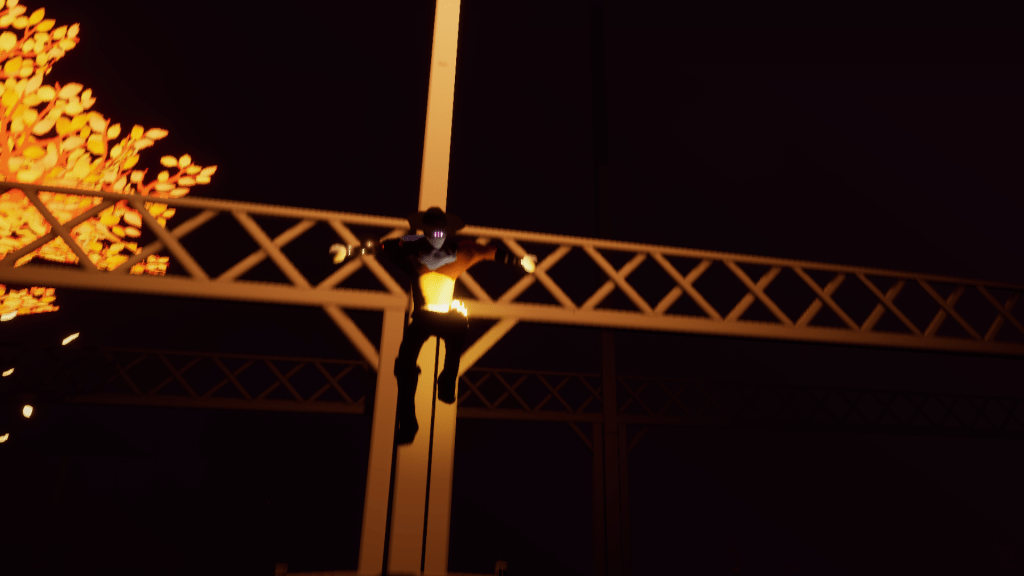
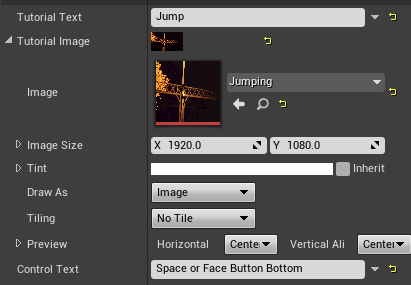
Tons of additions and improvements today. Felt extra motivated after holy week and my girlfriend was able to play through the whole level and watching her opened my eyes to a few bugs and areas I needed to refine. I began by adding a very simple tutorial ball for the jumping. I had realized I never added it because it completely slipped my mind. There is nothing special about the jump, and perhaps there should be if it’s too simple. But I won’t touch it for now.
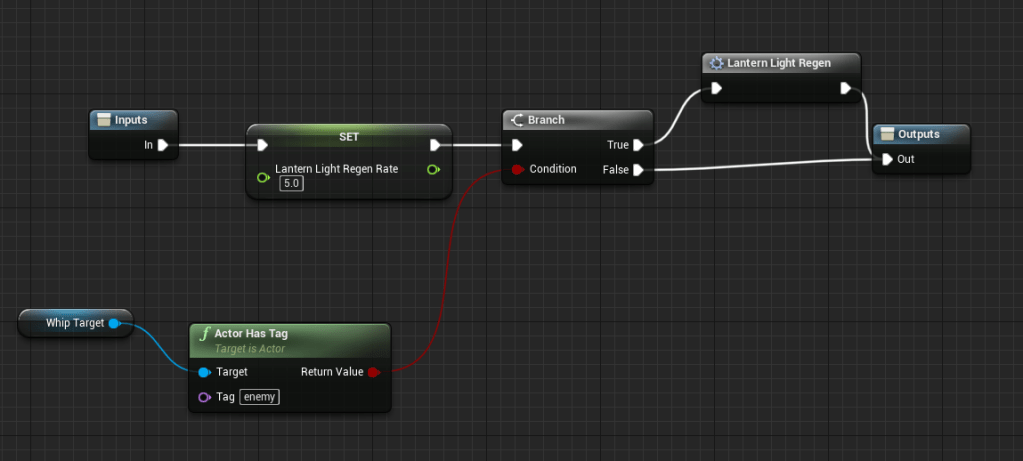
In one of my tutorial messages I say that hitting an enemy will recharge the lantern light, but the whip didn’t give any recharge. So instead of updating my message I changed some of the logic to make sure the whip gives some lantern light but not a lot of it because it would be too easy to exploit. I updated the collision for the lantern as well because the objects for inspecting could be grabbed through walls which I had thought to be fixed. With that I made sure the collision boxes for the items weren’t too close to walls to avoid clipping.
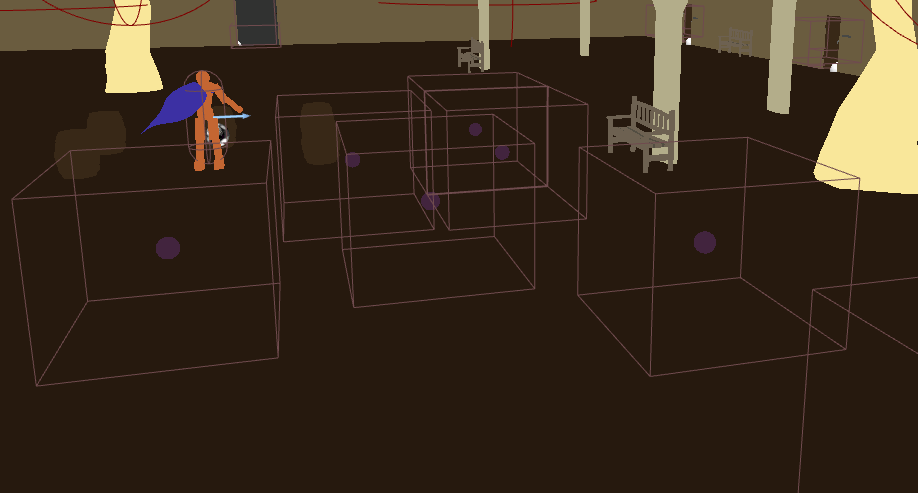

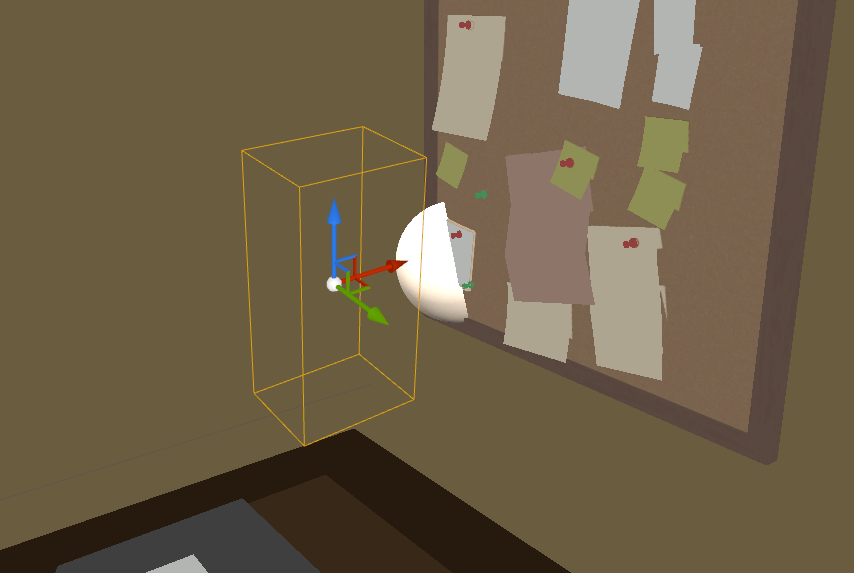
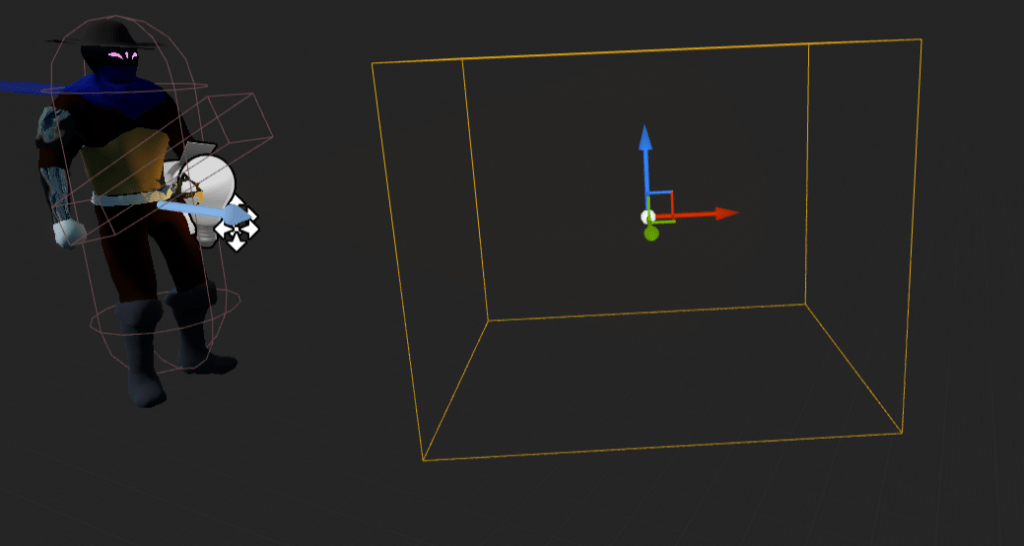
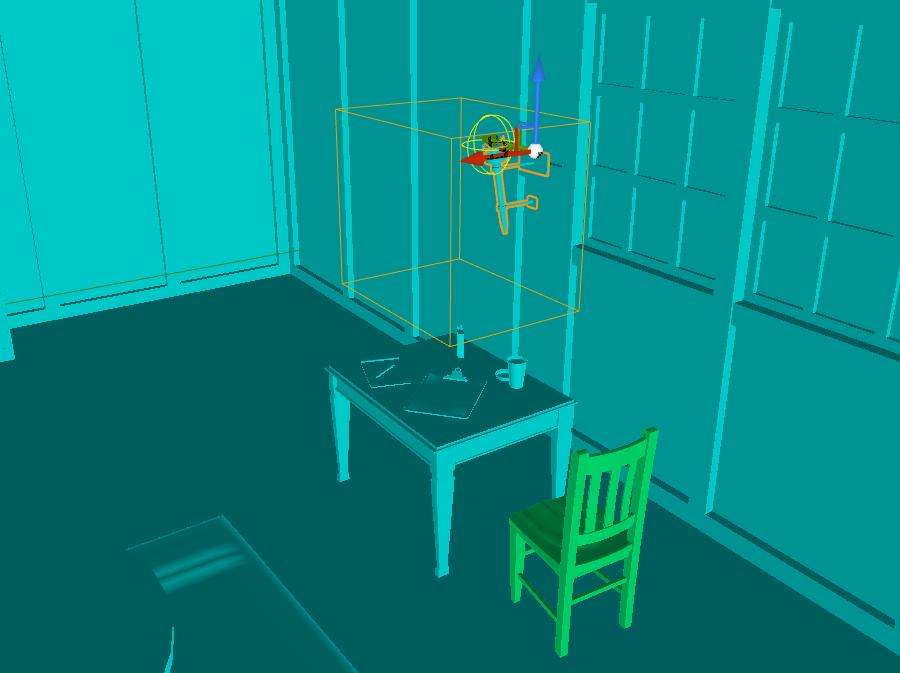
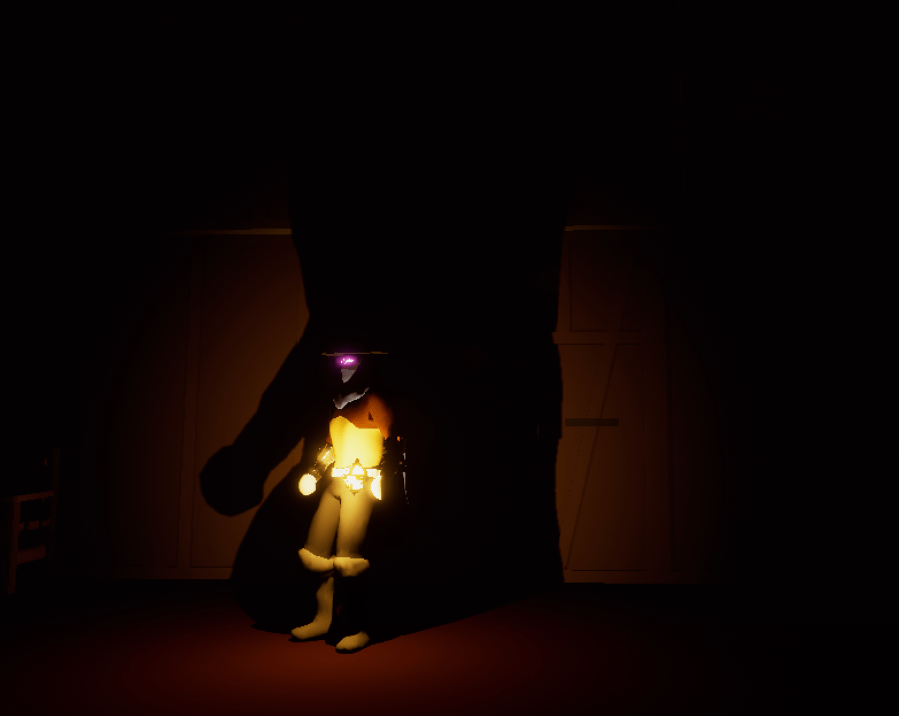
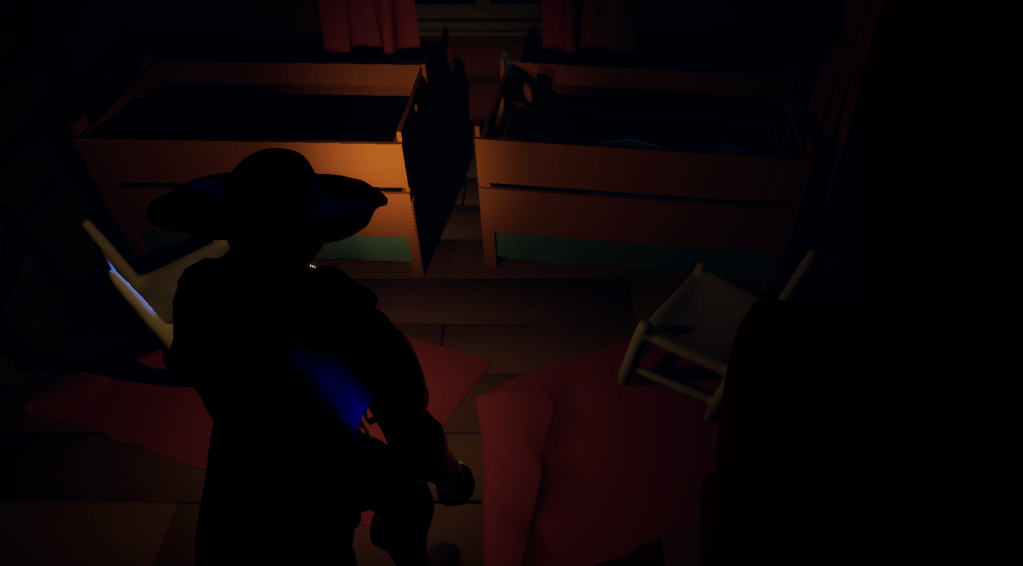
Watching someone else play was very enlightening because I was able to watch without having to think about playing. I noticed how the torches were in a bad spot because I had placed them beside all the doors so it was blocking half the room. In order to remedy this I moved the torches to the opposite wall and I found a view mode where I could see the collision outline of objects so it was easier to place the torches while seeing the parts of the wall that were sticking out. It makes the rooms look much nicer when it is entirely lit. The radius of the player’s lantern seemed a bit too small for me as well, especially because the first level has some very dark spots. By expanding the radius the light covers a larger area of course and the shadow casted from it is way more intimidating.
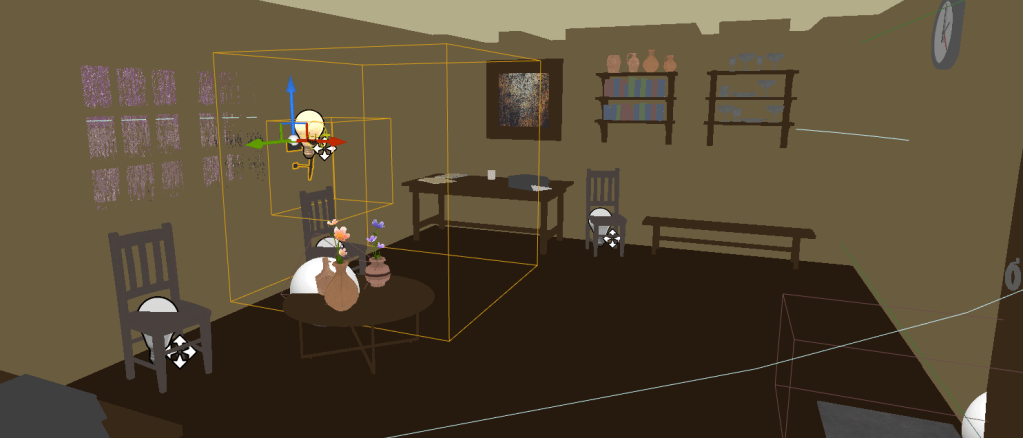
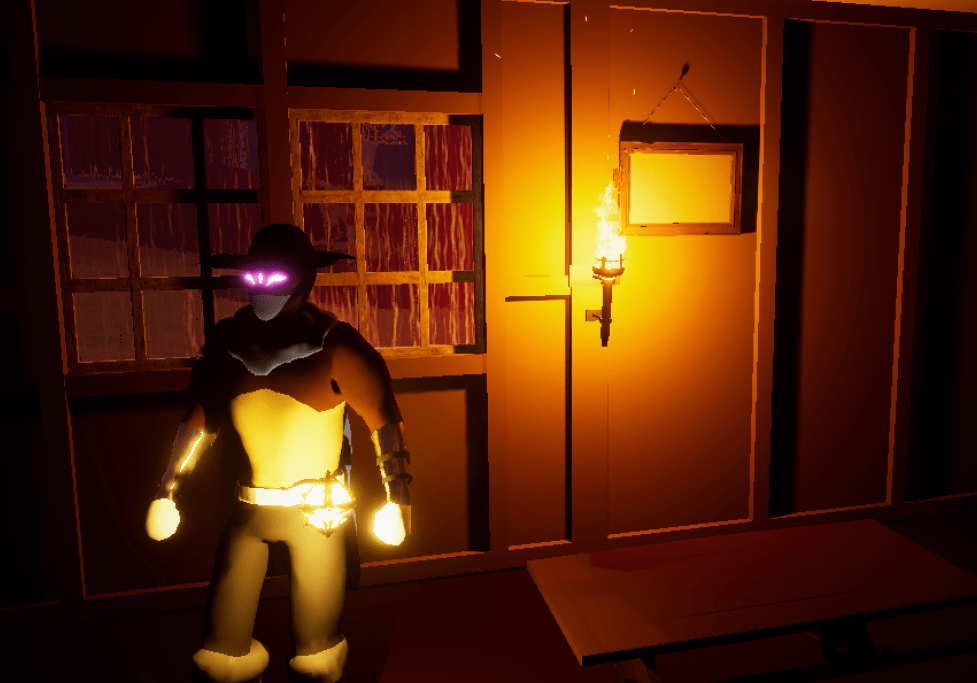
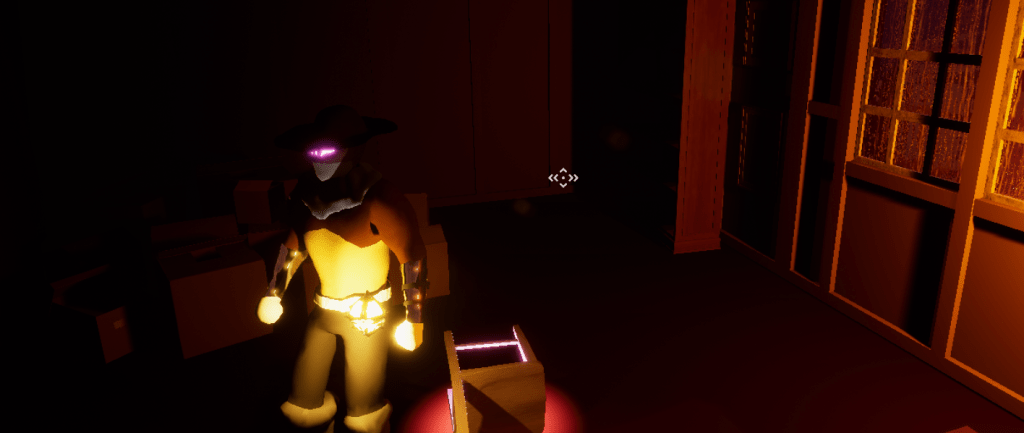
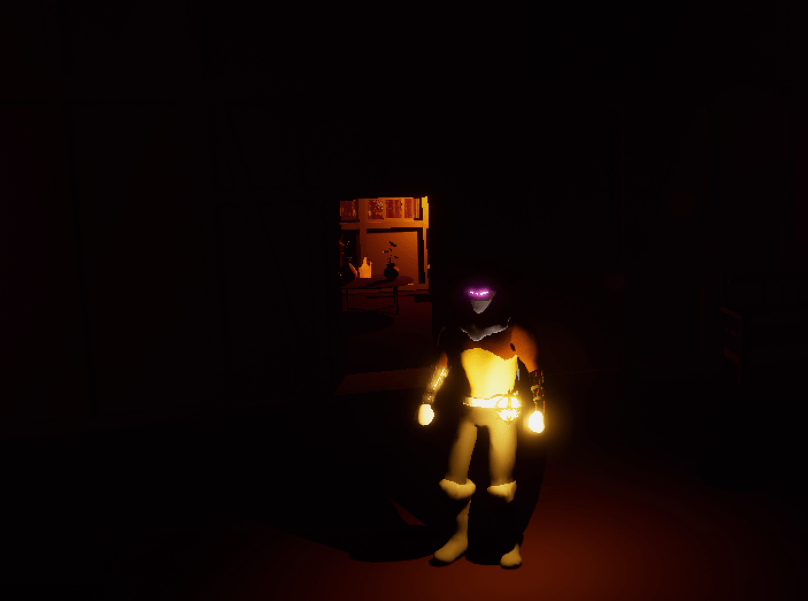
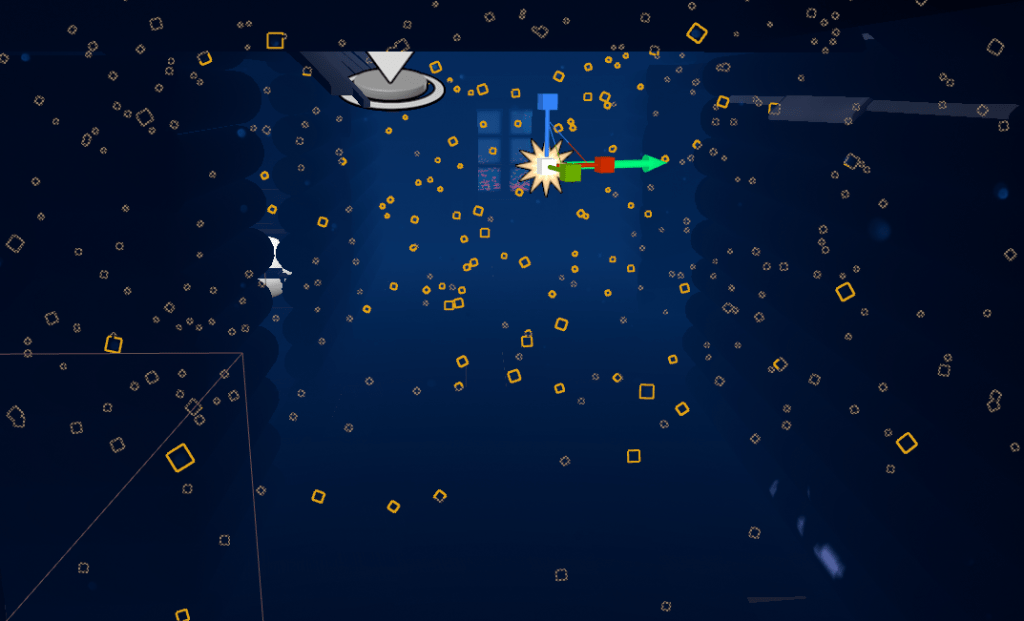
One of my favorite updates is adding particles that move towards the objects the player can interact with. It was clear that sometimes it was hard to tell what the text on the screen was referring to when the player could interact with an object. So by having a particle system move towards an object it communicates which object on the screen the player will be affecting when they press the interact button. From there I moved to the second level in development, the clock cottage. I added the final piece of the puzzle to help break the cypher. I’m not going to give it away of course. Just new clues in the final room. Then I made sure the house was extra dusty.
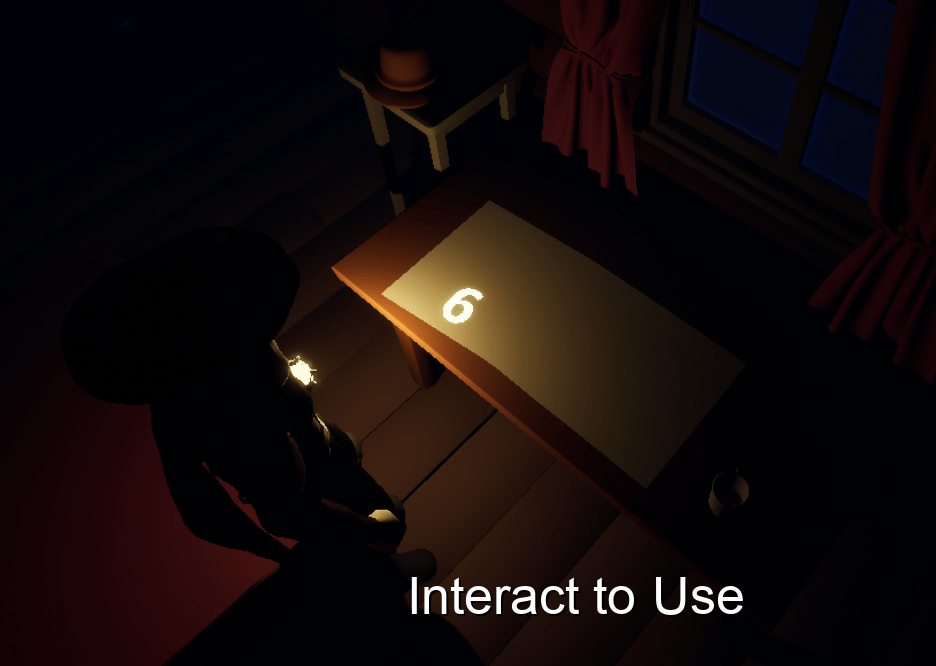
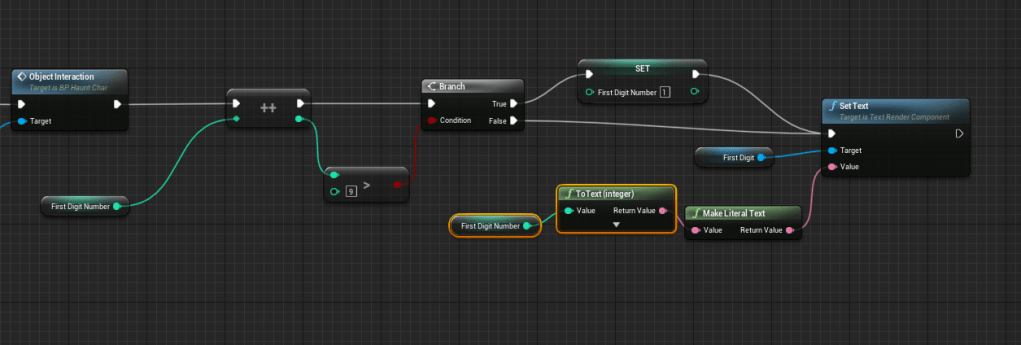
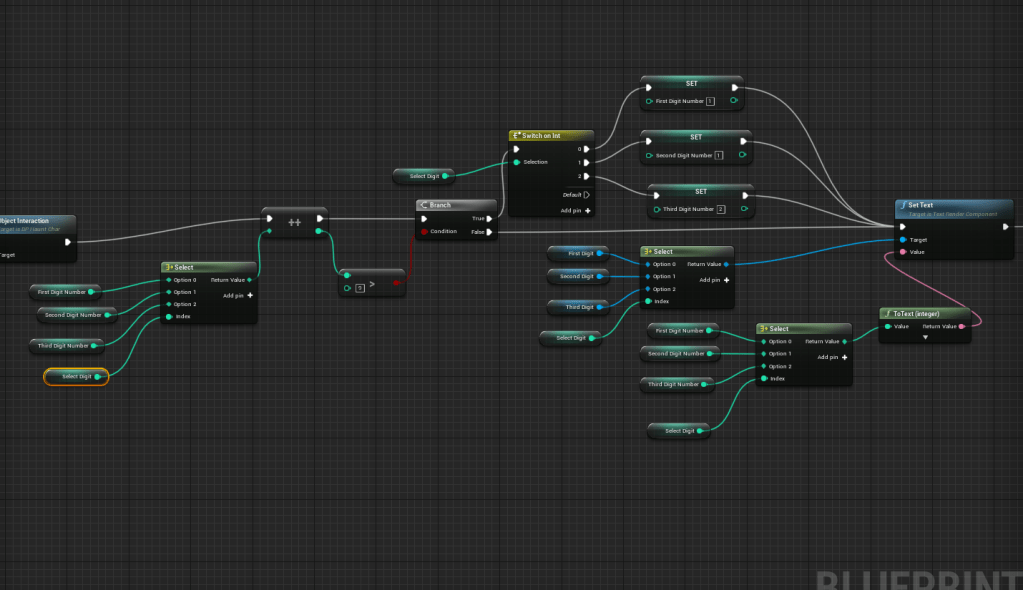
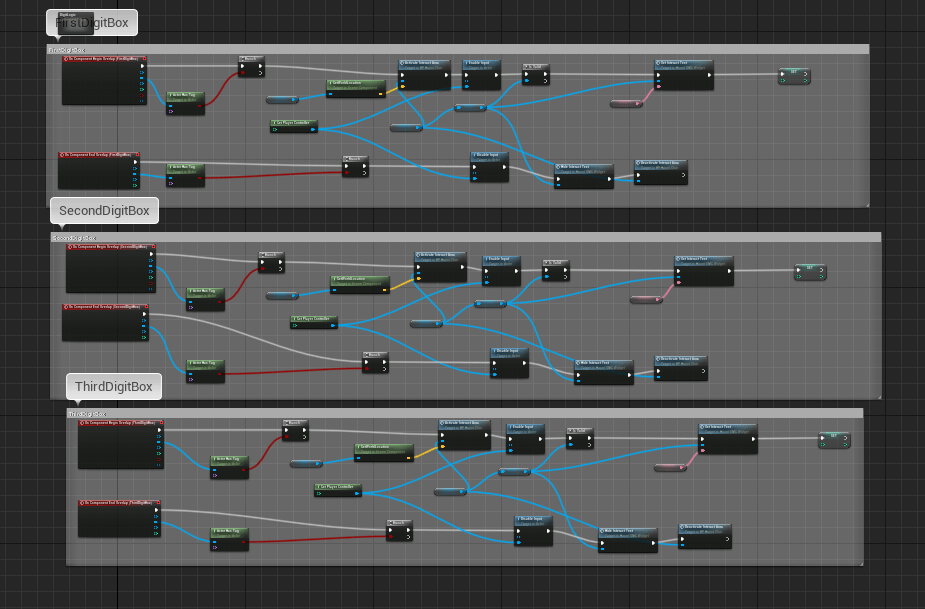
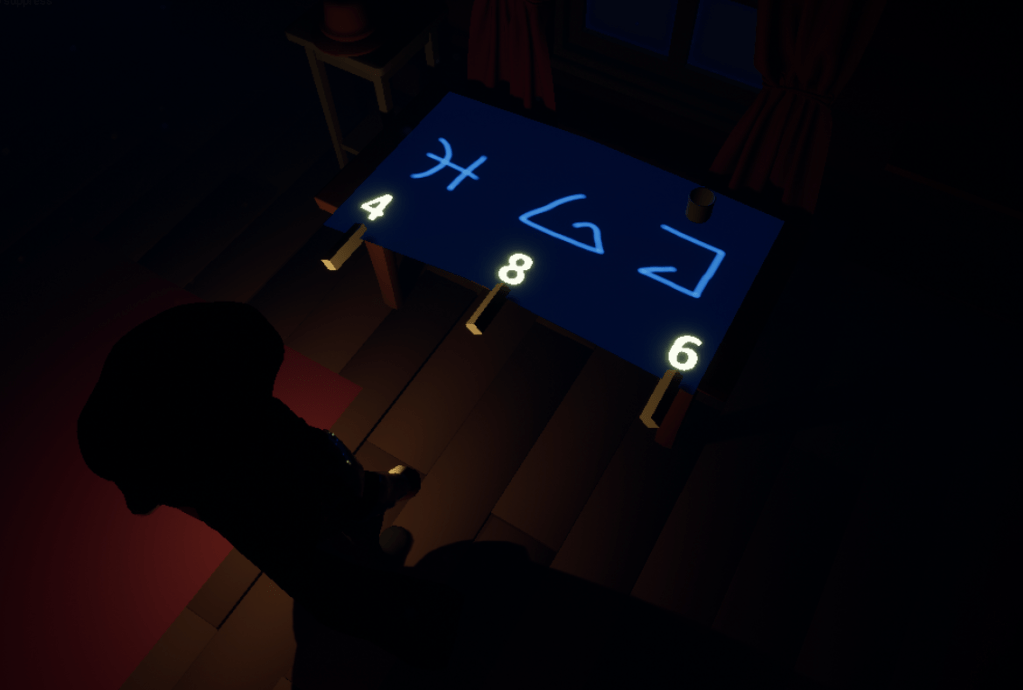
I took some time to think about how I wanted the puzzle in the cabin to work. There was a general idea of solving the cypher, and I knew I needed the numbers to be put somewhere. It was all a matter of how would the player interact with the world to change wherever the numbers would be. I came to the idea of putting it on a table. With large numbers the player and change each one independently. I had to figure out how to do this best, did I do it separately or put all of them in one blueprint. Of course it was more efficient to put it in one object but it took me some experimenting to figure out the best solution I could think of. Using separate collision boxes on the object may be a tad redundant but it was the easiest and quickest way in my eyes. It was a simple and elegant solution to changing the numbers and setting the max to 9 so it resets to 1 when the number is changed.
It was fun making a system where the numbers would change based on what the player wanted them to be, and that’s the great part about coding, there are so many ways to tackle the same problem. It reminded me of the problems I had to solve for my course. This isn’t the same as hard coding of course, it’s a visual scripting language, but the logic I was taught, and the philosophies I learned have truly helped me in being confident in the functions I create.
I’m using Unreal Engine to the best of my knowledge. So assigning integers to the numbers then converting it into text for it to render seemed the most elegant solution for me. I tested it on one of the problems and it solves properly. So far so good.
Coming up is the rest of the codes to break, and more effects for the dials on the tables. Then I have to figure out how I want the solution to connect to the progression of the stage.
 GoldenGratus Games