When developing the combat for my game I wanted to understand and pick apart what made the combat in Souls games so fun and special. Looking at it from a design perspective I slowly came to realize the Stamina bar that is present in all of their Soulsborne games can be seen as the amount of actions the player can take before “ending” their turn. With this knowledge, it is up to the player to spend their actions wisely and to place themselves in a safe position when they are out of “actions.” Of course, the enemy doesn’t follow this same flow, the only time they “end” their turn is when they have pauses in their attacks. In more recent games such as Elden Ring, some bosses seem to have ceaseless combos while the player dodges and waits patiently for a tight opening.
This formula of having a limited resource is tried and true. If I had decided to use it then it would immediately create tension in every scenario because it is arguably as important as the health bar. From the beginning of my work on Memoirium, I knew I wanted to do something different. And I didn’t want it to be different for the SAKE of being different. I wanted to make something new, interesting, and unique. It was hard to replicate the ebb and flow of combat that comes with having a Stamina resource. But again I never wanted to replicate, I wanted to understand and create something awesome.
While trying to come up with interesting mechanics I landed on the idea of resources that were multi-purpose. In the very early stages of development, there was only a single bar that acted as Health, Stamina, and Stress. Health was a no-brainer. Stamina I regularly changed how it worked from being a limited resource to affecting actions when it was empty. Stress was Memoirium’s first “special” mechanic. It allowed players to do extra damage to enemies when their Stress was full. The same goes for the player, they take extra damage if their own Stress is full. All of this being juggled in one single resource seemed like a good idea at the time until I realized it was too much weight put together.
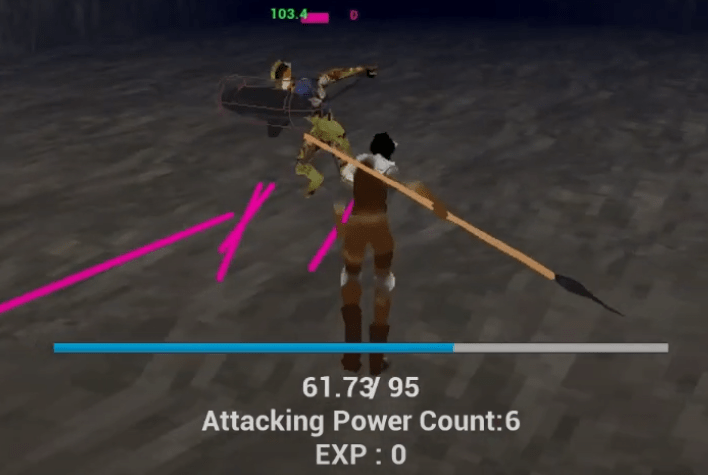
In the early iteration of Memoirium, as health goes down, the player’s maximum Stress and stamina are affected. This would mean they would constantly be Stressed and low on Stamina. After a while, I realized it was just not FUN. Part of my plan for development was to keep things simple (we developers always know how that turns out over time). Using one resource bar seemed rather efficient at first but I found it was way too punishing and the reward never outweighed the risk.
That is the main design philosophy I kept going back to, Risk and Reward. It was easy to see it plainly with a limited Stamina system. The Risk is when the player chooses to attack instead of dodging, they spend Stamina in this moment and hope they don’t get hurt. Obviously, the reward is damaging the enemy. So I continued to ask myself how do I keep that Risk and Reward without relying on a limited resource?
Before I continue about the resources I should mention the main actions in Meemoirium. Players can attack, dodge, and reflect (parry). Dodging is the least risky because it’s the easiest way to avoid damage. Reflect was the most risky because it requires precise timing and the cost of failure is taking damage, but the reward was increasing the enemy’s Stress.

After convincing myself I needed to split the resources I ended up with two bars, Health and Stress. Health was too important to do anything else but act as Health. Stress would act as Stamina by limiting the player’s actions when it was full. So what I ended up with was a system that didn’t necessarily stop what the player was doing, but it communicated that when Stress was full the player could continue fighting with the Risk of taking extra damage. At first, that’s all the Risk I gave, the extra damage. Then I realized I had to make it more dangerous somehow. So when Stress was full the dodge which was normally a roll turned into a short dash. Then I made it so they couldn’t sprint either.
I was pretty happy with where I landed with how Health and Stress worked. It was simple and efficient. Then as development continued I wanted to add more depth (so much for keeping things simple. So new mechanics were born starting from spells that I called Lullabies, and status ailments as well. Variations of dangers always made exploring more interesting and encouraged players to take advantage of other systems such as items that cured or defended against specific elements. The third resource I added was called Connection. This is the weirdest one and honestly, I’m not too sure how most people will feel about it. Connection acts as the resource for Lullabies, like mana, and also serves as a Status bar.

How it works is when players use Lullabies the bar fills up and when it’s full the next Lullaby will cause the player to take on the status ailment of whatever element they used. While ailed the player takes a huge chunk of damage if they use a Lullaby. Connection fills up in other ways as well such as getting hit by an enemy with elementally infused attacks. Technically the player could keep using as many Lullabies as they wanted. The true limiting factor is their health which would take the toll.
In the end I still ended up with resources that serve multiple purposes. It may take a while for players to fully grasp how Connection works but I think it still follows the Risk and Reward that I am going for. Hopefully, players will see and feel the fun that Memoirium offers as they grasp how all these systems work together.
 GoldenGratus Games